Black History Embroidery Clipart: A Designer’s Real-World Review
First Impressions: Bold, Proud, and Ready for Purposeful Use
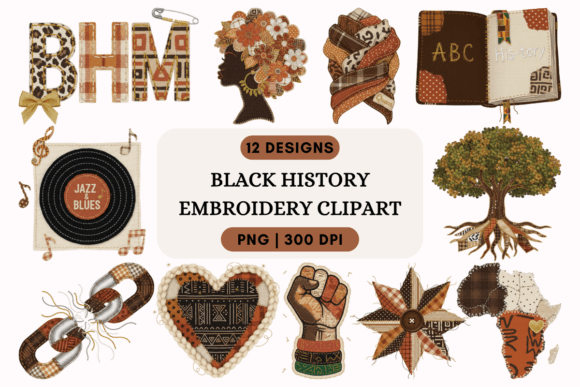
Opening the folder for Black History Embroidery Clipart, I was immediately struck by the visual strength of the designs. These aren’t just decorative graphics—they feel like statements. The shapes are clean yet expressive, the themes rooted in cultural pride and historical depth. The layout of each piece balances detail with clarity, avoiding overcomplication while still conveying a rich visual narrative. It’s clear this set was made for more than just a quick stitch—it’s meant to be worn, gifted, and displayed with intention.
From a designer’s perspective, the first thing I noticed was the versatility in mood. Some motifs lean celebratory and vibrant, others more reflective and dignified. This range makes the clipart suitable not just for Black History Month, but for year-round use in meaningful, custom-made products.
Real-World Use: From Sweatshirts to Boutique Accessories
I tested a few designs on a custom tote bag and a cotton sweatshirt—two common items in my Etsy shop. The embroidery stitched cleanly, with smooth satin and fill stitches that held up well under tension. The design scaled nicely for both hoop sizes I used, maintaining clarity even when slightly resized. On the tote, the motif added a proud focal point without overwhelming the fabric. On the sweatshirt, it gave a handmade, boutique feel that customers often seek for personalized gifts.
Thinking beyond apparel, I could easily see these designs working on baby items like bibs or onesies, especially when paired with simpler fonts or borders. For boutique owners, this clipart could become part of a curated collection of heritage-themed home goods—pillow covers, tea towels, aprons—each with a story to tell.
Where to Be Careful: Fabric, Size, and Placement Matter
While the designs are strong, there are definitely situations where caution is needed. I noticed that on thinner or stretchy fabrics like jersey or lightweight cotton, the denser fill areas could pucker slightly if not stabilized properly. That’s a common issue with any detailed embroidery, but it’s worth mentioning here since some of the motifs are quite dense.
Small hoop sizes are another consideration. The more intricate pieces lose impact when scaled down too much. For example, a detailed African heritage motif looked great at 4x4 inches, but felt lost when squeezed into a 3x3 hoop. Lettering, if included, would definitely need testing for legibility, especially on dark fabrics where contrast might be low.
Curved surfaces like caps or sleeves also require extra attention. I tried one design on a baseball cap and found that the top arch of the motif distorted slightly during stitching. It wasn’t a dealbreaker, but something to test before offering as a regular product.
Design Impact: Elevating Visual Appeal and Customer Trust
One of the strongest points of Black History Embroidery Clipart is how it elevates the perceived value of a product. Whether it’s a custom tote or a boutique sweatshirt, adding one of these motifs makes the item feel more intentional, more personal. It gives handmade goods a professional edge, which is crucial for Etsy sellers or small shop owners trying to stand out.
From a branding standpoint, these designs can help maintain consistency across product lines. If you're building a collection around heritage, identity, or empowerment, this clipart offers a cohesive visual language. It also increases giftability—customers looking for meaningful, identity-driven gifts will connect with these designs emotionally.
And let’s not forget recognition. These motifs are instantly identifiable and culturally resonant. That kind of visual clarity builds trust with buyers who want to feel confident that what they’re purchasing aligns with their values.
Designer Notes: Practical Tips for Real Embroidery Work
If you're planning to use Black History Embroidery Clipart in your next project, here are a few things I’d recommend:
- Test on scrap fabric first—especially if you're working with textured or stretchy materials.
- Check thread color contrast against both light and dark backgrounds to ensure legibility.
- Review stitch density—some fill areas might need slight adjustments depending on fabric type.
- Confirm hoop size compatibility before stitching on a finished product.
- Inspect small details like outlines or lettering to ensure they’ll stitch cleanly at your intended size.
- Test in black and white mockups to see how the design translates without color.
- Use the right stabilizer—especially for layered or curved surfaces.
- Verify licensing if you plan to sell finished items or digital embroidery files.
Also, if you're creating digital product previews or printable mockups, these designs render well and maintain clarity at various zoom levels, which is a big plus for online sellers.
Final Thoughts: A Thoughtful Addition to Your Design Toolkit
Overall, Black History Embroidery Clipart is more than just a design asset—it's a meaningful tool for creative entrepreneurs. Whether you're an Etsy seller, a craft business owner, or a digital product creator, this clipart offers a powerful way to add cultural depth and emotional resonance to your work.
It’s not just about aesthetics—it’s about storytelling through stitch. And for that, it earns a solid place in my embroidery design library.